
Dick and Jane, RIP

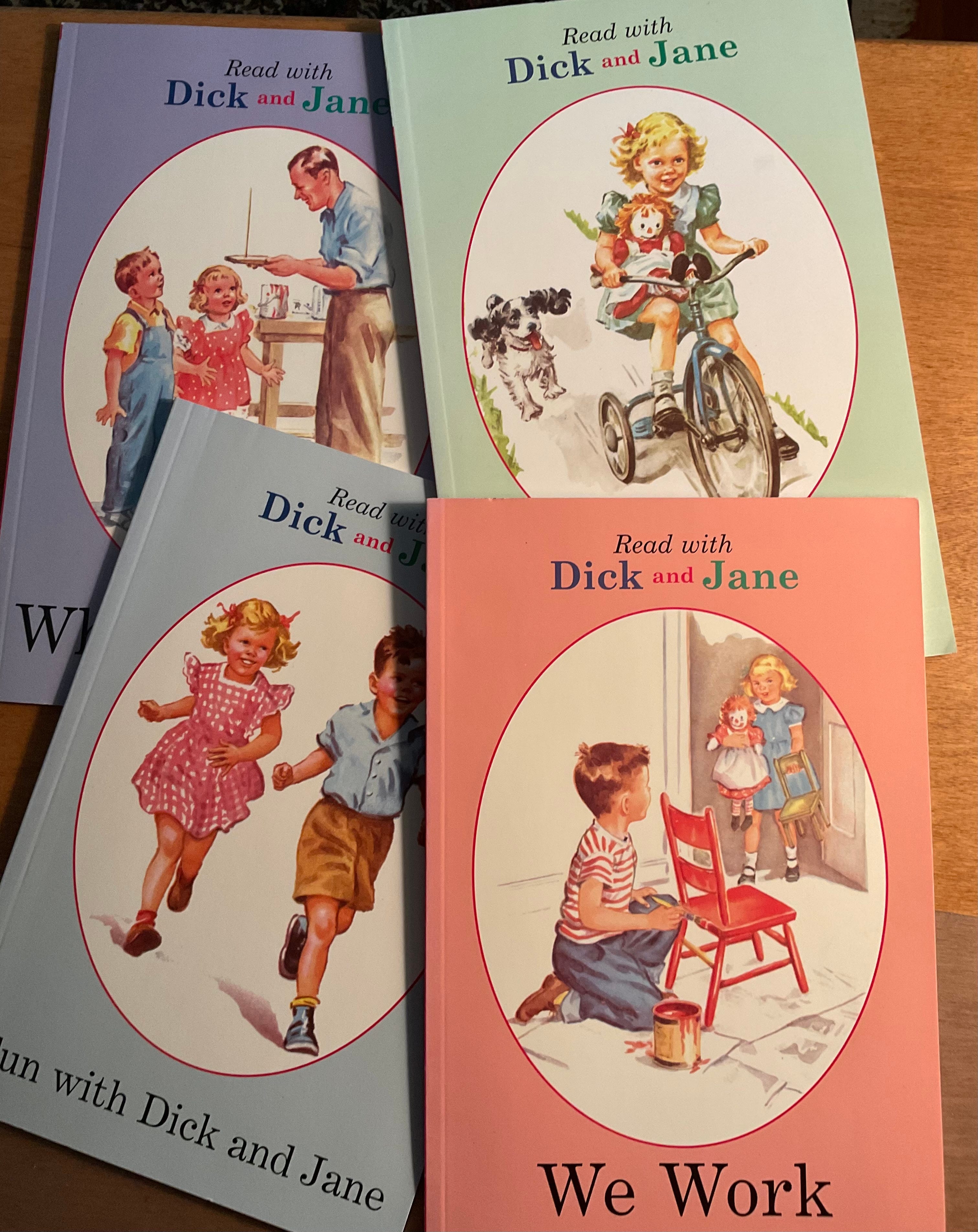
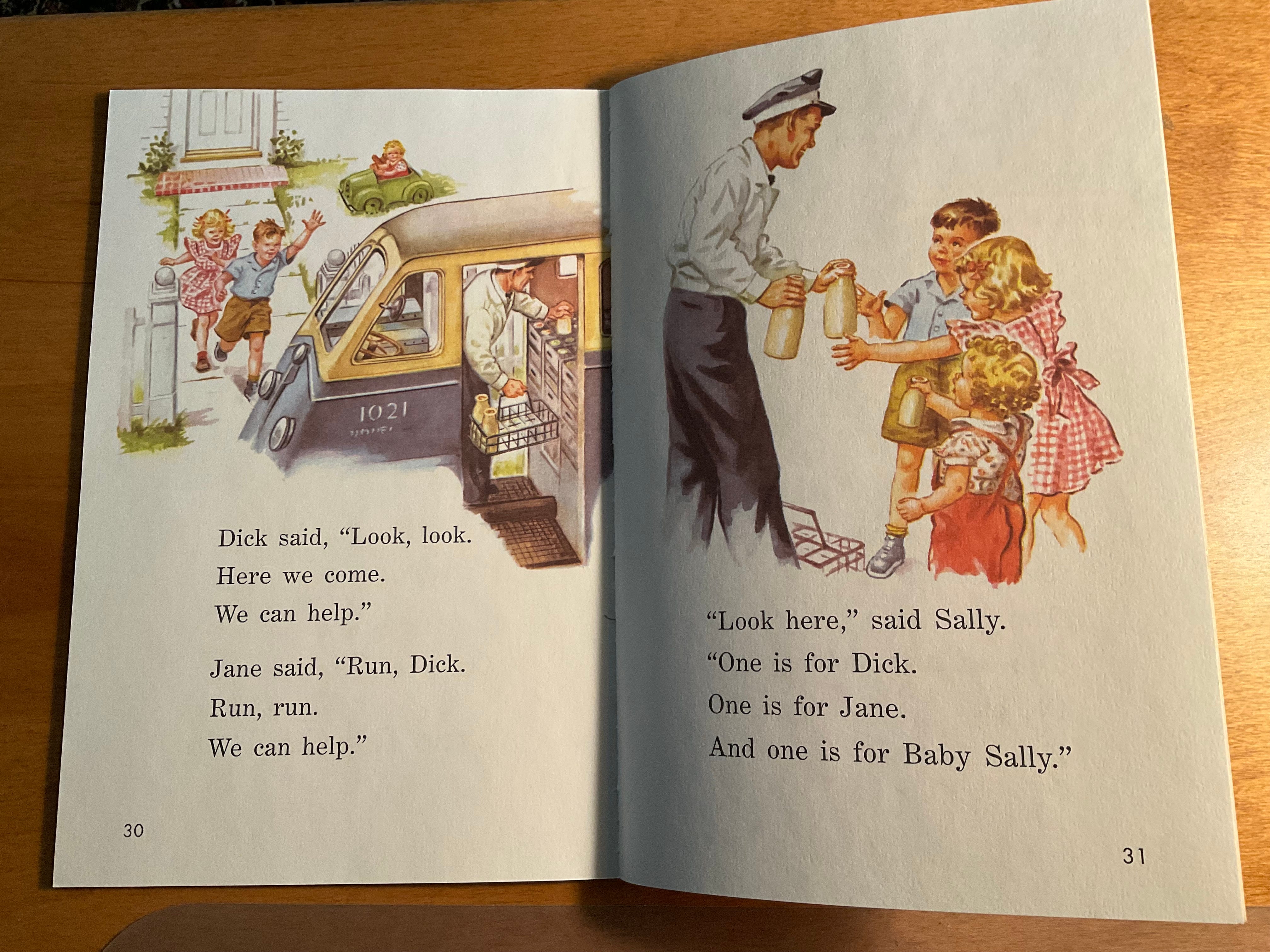
If you are of a certain age, and grew up in the United States, you are familiar with the Dick and Jane series of books that were used in primary schools across this country. They were an innocent way of teaching phonics and, simultaneously, infused national values of hard work, family, kindness, honesty, and fun into the minds and hearts of young children. The pastel images of “Mother, Father, Dick, Jane, Sally, Spot and Puff” are embedded into the right temporoparietal junction of the brain [that region that activates the foundation for language and literacy]. The highly idealized version of the American family displayed was typical for the time: white, middle class, home owning with the 2.5 children as the national average. Was it reflective of the nation? No, not even back then when there was a white majority… even the milkman was white. But aside from the racial bias that was everywhere at the time, think television - all of the families were a reflection of the Dick and Jane family, with the odd tendency to throw in a widowed father on occasion [a column for another time…. troubling trend for the emerging women’s movement….]
What happened to the Dick and Jane readers? They slowly, and then very quickly, exited the national classrooms and were replaced by stylized cartoon characters. There is nothing wrong with that, of course, but a more recent trend of using iPads for elementary school teaching is - in my opinion - a disaster for the developing brains of children. The molding of a brain is dependent upon a variety of factors, but foremost in that endeavor is sensory awareness. The pastels of the Dick and Jane readers elicit something in the minds of children. I distinctly recall a day in second grade when I was suddenly jolted from my revery of ‘dick and jane land’ and back to a classroom with Sister St. Ambrose clucking away in front of a very old chalkboard coated in chalk dust, and the vision of those dust particles floating by her wimple. Very distinct! Why does that memory stick so firmly? Because, I believe, the imagination of children is sparked by those sensory experiences - and screens simply do not provide that experience. If anything we know that even science experiments are “conducted” by showing children a ‘you tube’ video. Not even close to inspiring future scientific inquiry! And the long term effects of screen saturation is a reduction in the formation of basic neural networks and a severe crimping of attention span. These consequences have long-term, negative effects for the nation.
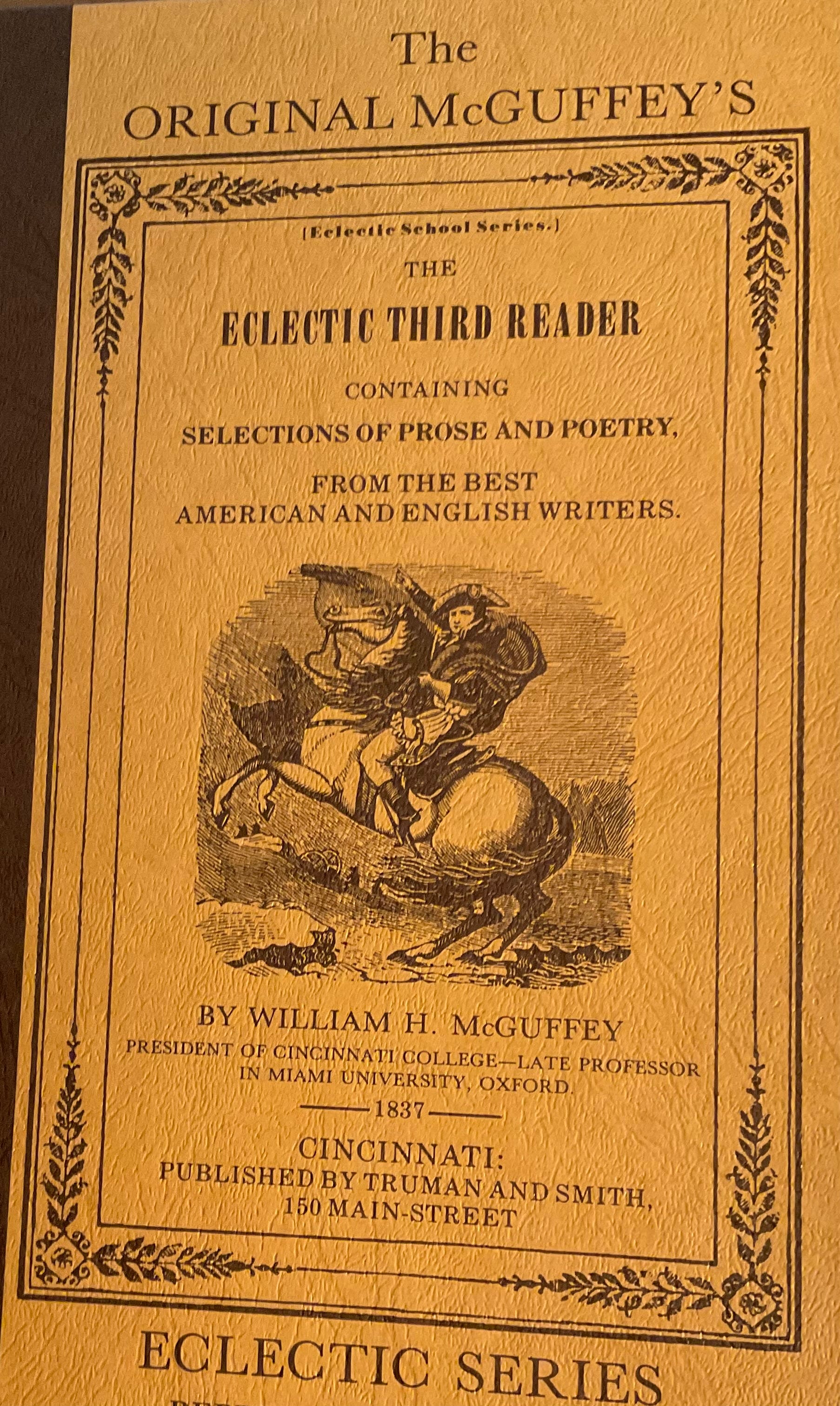
The Dick and Jane readers were an update from the national curriculum developed in the 19th century - the McGuffey Reader. McGuffey’s goal was to teach reading to an increasingly diverse nation of immigrants who learned not just the English language but, equally important, the cultural values of the nation. Did they use religion? Yes, for sure, and no longer a tenable teaching tool obviously but the principles behind those lessons still hold firm: honesty, hard work, and civic pride.
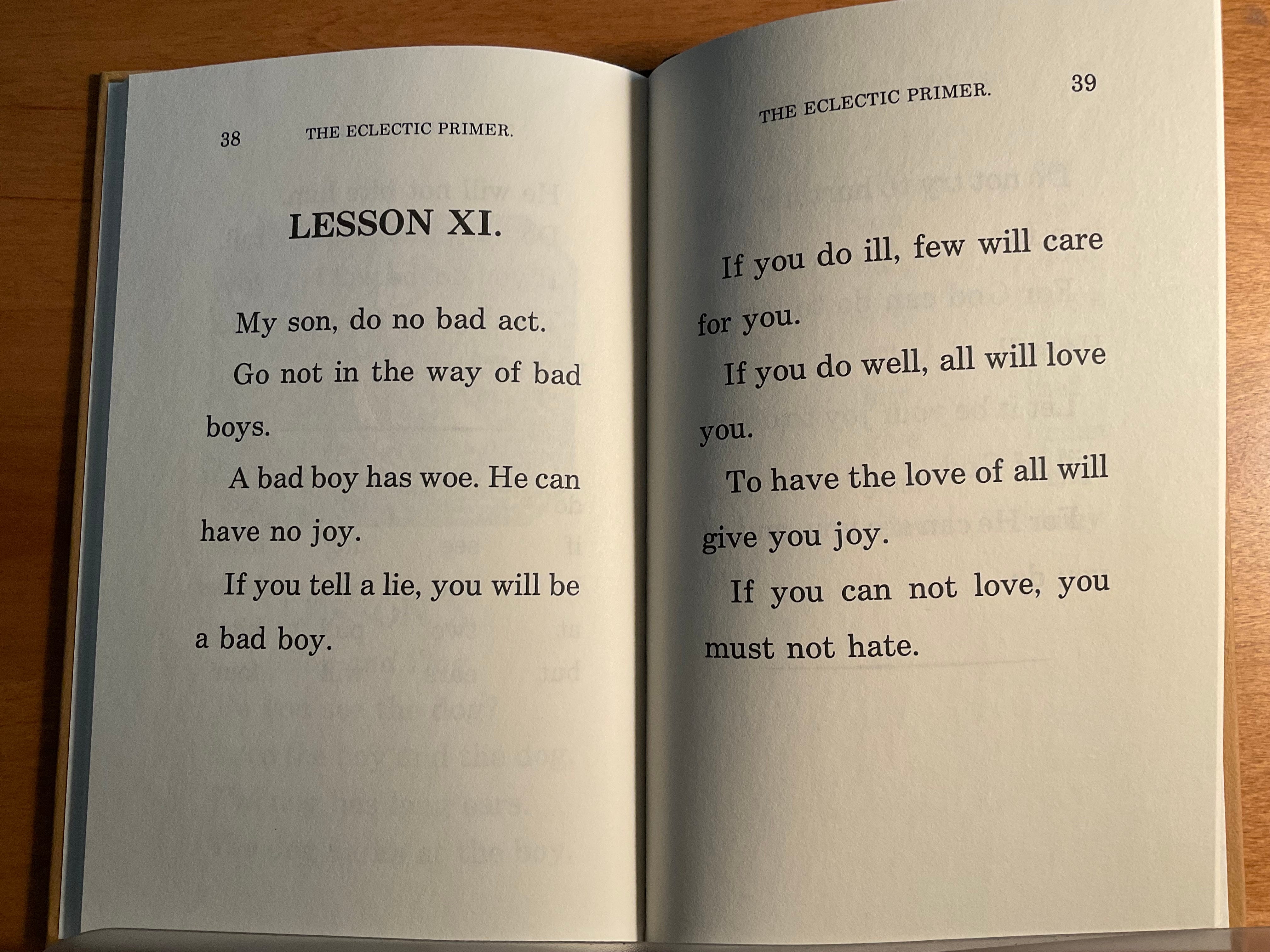
Seems pretty simple: use moral education to instill the virtues and values that a nation needs to flourish. I am deeply skeptical that a ‘you tube’ video can translate that message to a young and eager mind. The examples of great teachers (Goodbye Mr. Chips, Good Morning Miss Dove, Dead Poets Society, to name a few) abound and were all very distinct in their methods of teaching but the one common thread is experiential teaching. Bringing material alive to a young brain is a thrill that the teaching profession is abdicating. Perhaps the push to limit screens in schools will reverse this horrible trend. One can hope.
Loved the reading then and love your writing now.
p.s. except for Puff :-)